Honda CBX
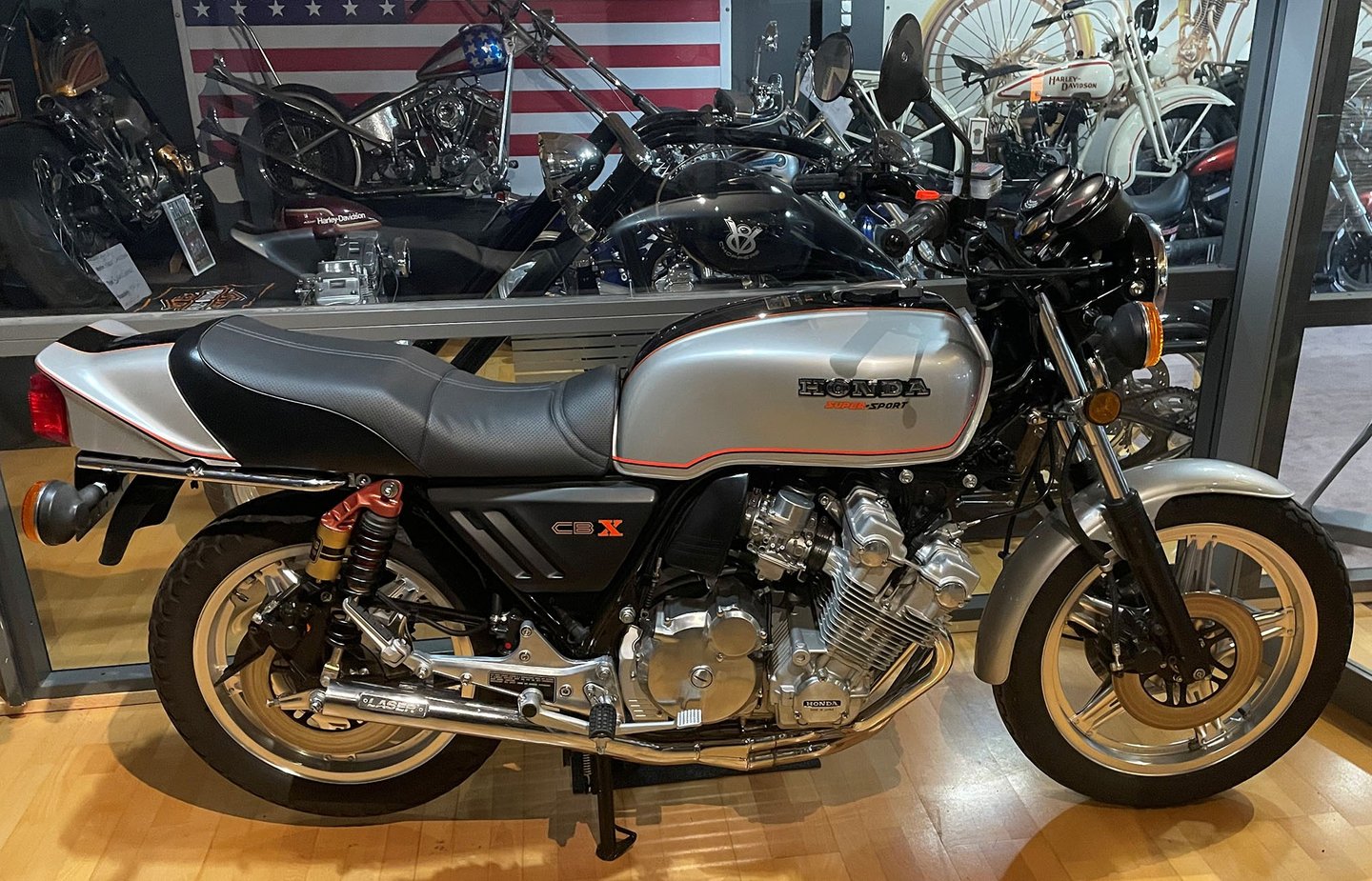
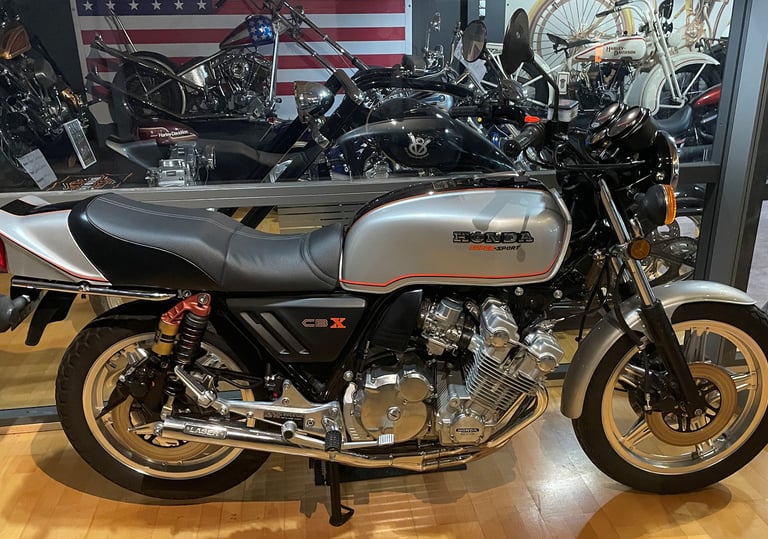
The Honda CBX is a legendary motorcycle, particularly known for its six-cylinder engine. Launched in 1978, it was groundbreaking for its time, but was not a great commercial success. Today, the CBX 1000 is highly regarded as a classic and collector's item.
The CBX's six-cylinder engine is its most distinctive feature and source of admiration. The engine is known for its silky smooth ride and powerful acceleration.
Although it is a heavy bike, the CBX is relatively easy to maneuver and has good stability when riding rough.
The CBX has achieved high collector status, and original models from 1978/79 can sell for significant sums.
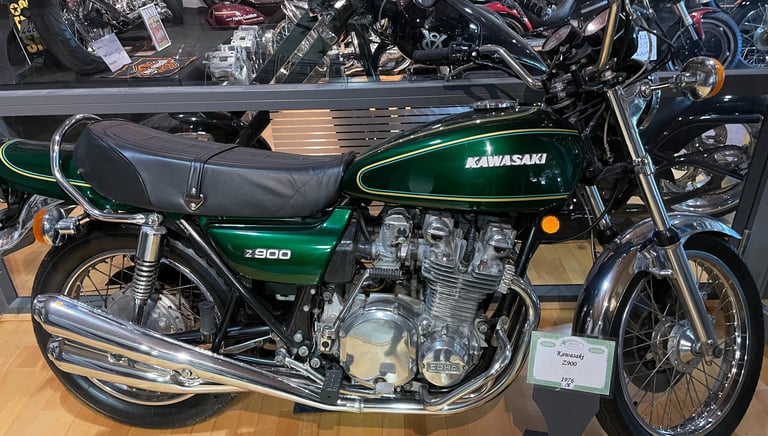
1976 Kawasaki Z900
In the 1970s, Japanese manufacturer Kawasaki launched the Z900, which is notable for being the first large-capacity four-cylinder motorcycle to use a double overhead camshaft on a production motorcycle.
The motorcycle features a round headlight, analog instruments, a dual seat, side-mounted rear shock absorbers, a four-into-four exhaust system with two mufflers on each side, and wheels with traditional spokes.
The motorcycle has a steel tubular frame and a suspension system consisting of a 36 mm telescopic fork at the front and preload-adjustable dual shock absorbers at the rear.
Braking power was generated by a 296 mm brake disc mounted on the left side of the front wheel and a 200 mm drum brake at the rear. In the United States, it could be ordered with a dual front brake disc, which provided optimal braking performance.
The 1976 model was powered by a 903cc air-cooled four-cylinder four-stroke. The engine is equipped with two overhead camshafts and two valves per cylinder. The engine delivered 81 hp at 8500 rpm, and the bike had a stated top speed of over 190 km/h.
Production years: 1975, 1976, 1977, 1978, 1979
This fine machine is on display at the Scandinavian Motorcycle Museum. Stop by to see it and all the other fine and special motorcycles on display here.
Photo: Øyvind Ånerud
Motorcycle of the Month
Every month we select a motorcycle that we present with exciting and complementary information.
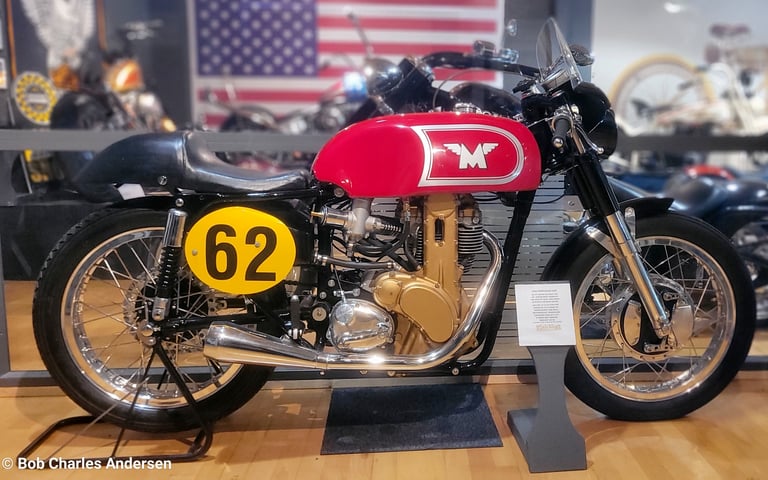
Matchless
Founded in 1889 by Henry H. Collier who started out as a bicycle manufacturer. The first motorcycle was introduced in 1899: a pedal cycle with a single-cylinder engine mounted above the front wheel. It was not a success.
Matchless won the first TT race on the Isle of Man in 1907 in the twin-cylinder motorcycle class.
Matchless acquired AJS in 1931, Sunbeam in 1937, Francis-Barnett in 1950, James in 1951, Norton in 1953 and Indian in 1959.
The Matchless factory closed in 1969.
October 2025
July 2025
August 2025
April 2025
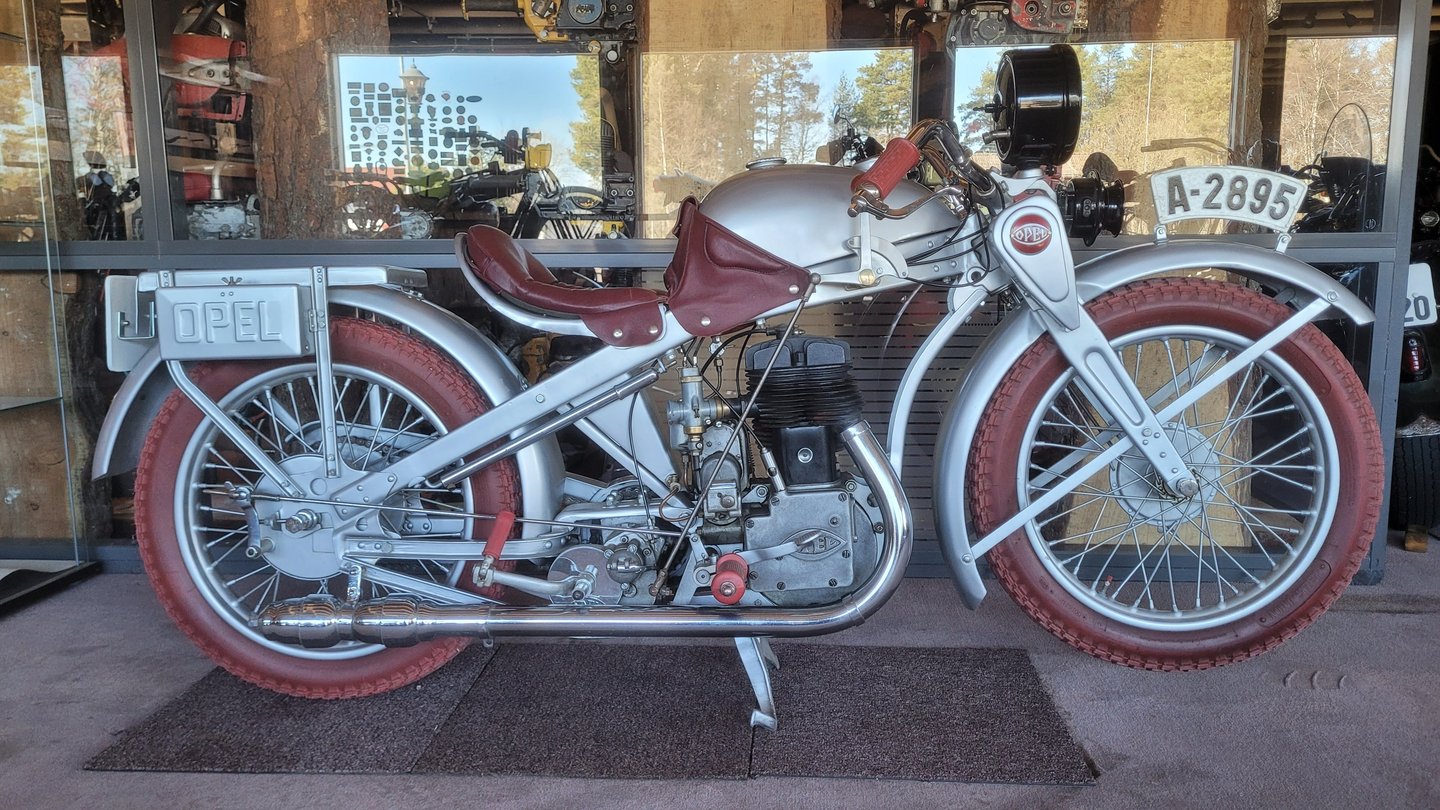
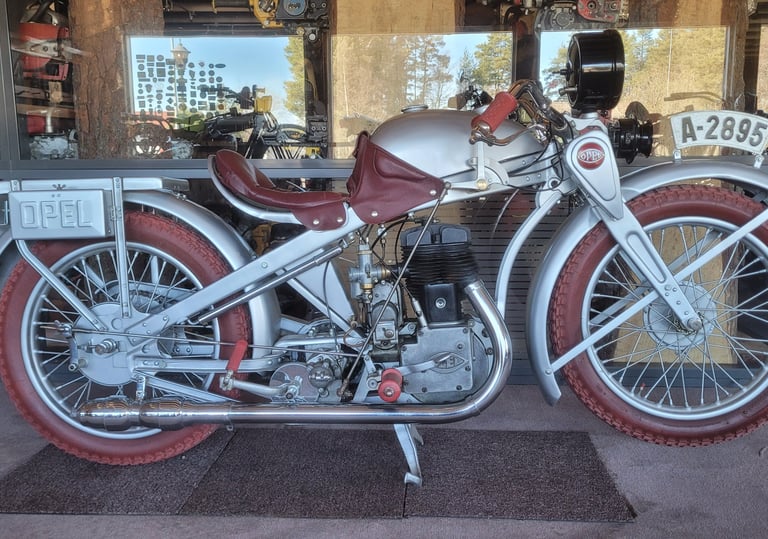
Opel Motoclub
Adam Opel's company was located in Rüsselsheim am Main in Germany and its products included sewing machines, bicycles, cars and motorcycles.
The latter products were made in three periods: for a few years in the early 1900s, then from 1913 to the mid-twenties and finally from 1928 to 1930.
At the Berlin Motor Show in early 1928, Opel stunned the motorcycling public with the display of two very extravagant machines. The frame, front suspension, tank, saddle and handlebars were unorthodox to say the least.
This, combined with the cadmium coating on the metal parts and the bright red components such as the saddle, tires, handlebars, footrests and kickstart rubber, made for a fantastic sight.
The design itself was not Opel's; the company had secured the production rights to the rolling motorcycle chassis system from the highly unorthodox and multi-talented Ernst Neumann-Neander.
One of the great advantages, Neumann-Neander claimed, was that his pressed steel frame construction made it possible to reduce the assembly time of a motorcycle from between 20 and 25 working hours to no more than four working hours.
The Opel Motoclub was produced in approximately 6,000 units between 1927 and 1930.
It was available in two versions, the 500T and the 500S. The 500T had a side-ventilated engine with 16 hp and the 500S had a top-ventilated engine with a full 20 hp.
The Motoclub was the last motorcycle Opel produced.
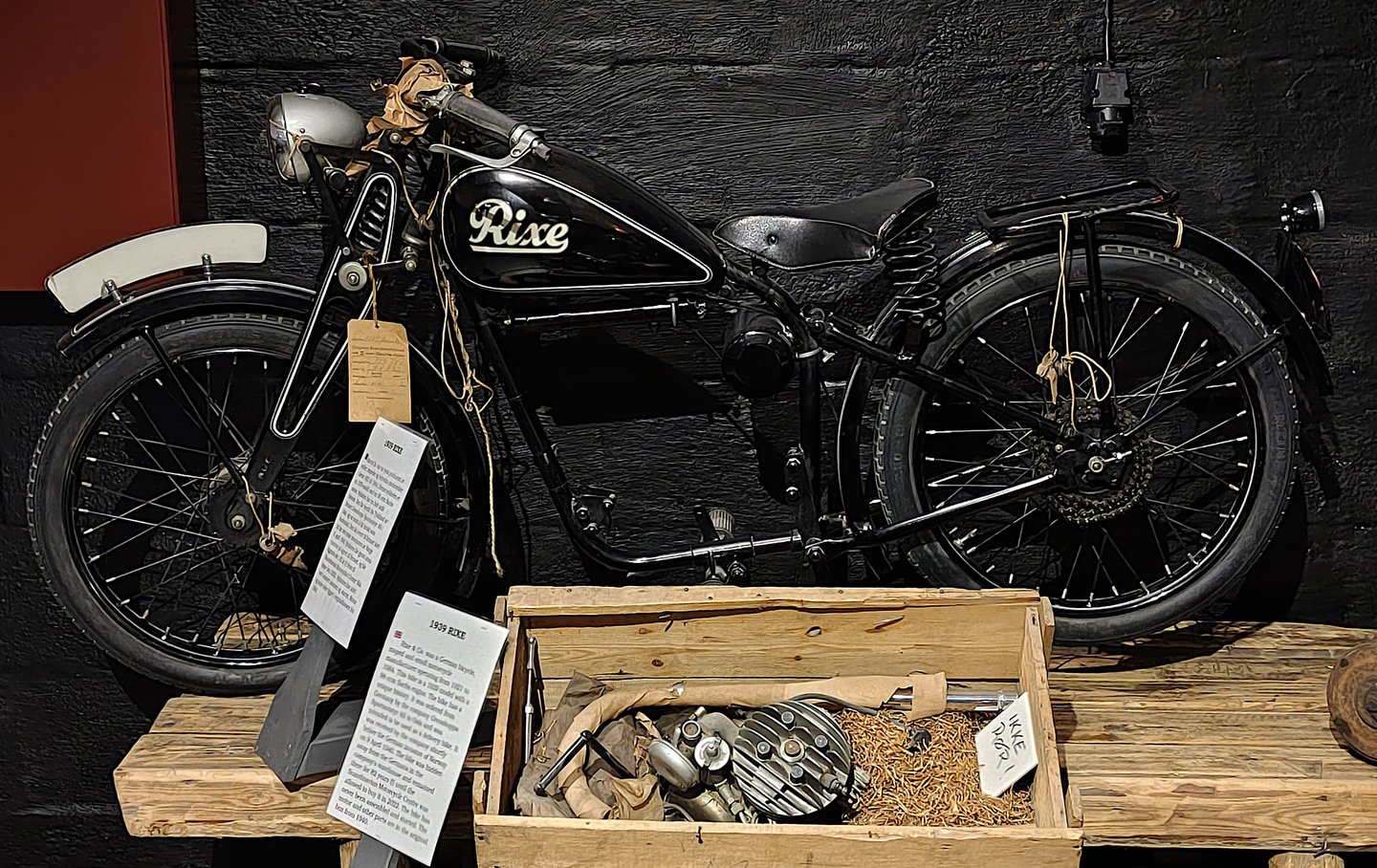
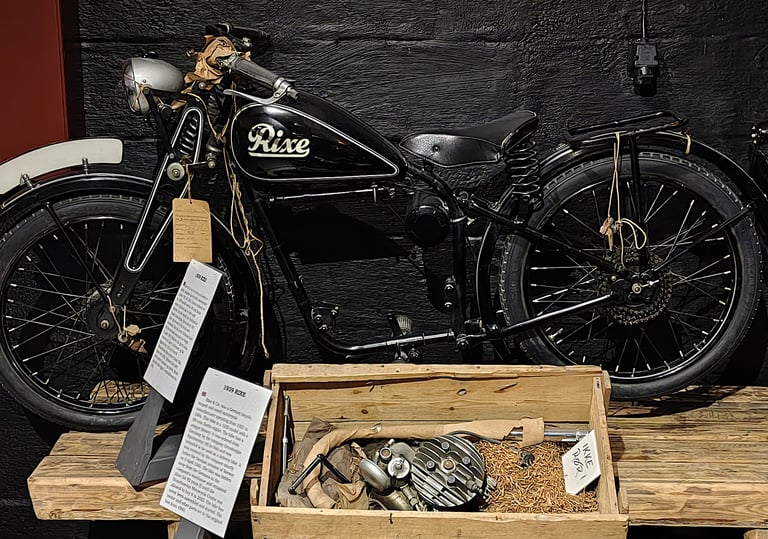
1939 Rixie 98 ccm
Rixe & Co. Was a German manufacturer of bicycles, mopeds and lightweight motorcycles from 1921 to 1984. This is a 1939 model with a 98 cc Sachs engine.
This bike has a very unique history. It was ordered from Germany by the company Gresshoppa Sportsutsyr AS in Oslo, and was intended to be used as a courier bike. It was delivered to the company shortly before the German invasion of Norway on April 9, 1940. The bike was hidden from the Germans in the company's warehouse, and remained there for 82 years (!) until the Scandinavian Motorcycle Center was able to buy it in 2022. The bike has never been assembled and started. The engine and other parts are still in the original box from 1940.
The bike is on display at the Scandinavian Motorcycle Museum. Stop by and see this unique bike and all the other nice and special motorcycles that are on display here.
March 2025
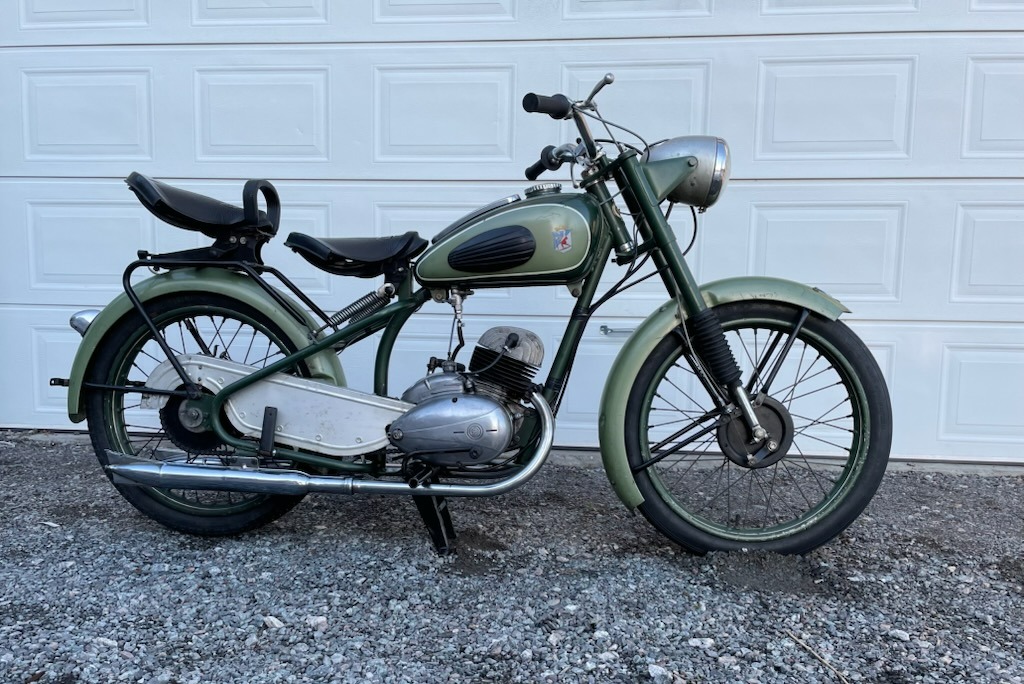
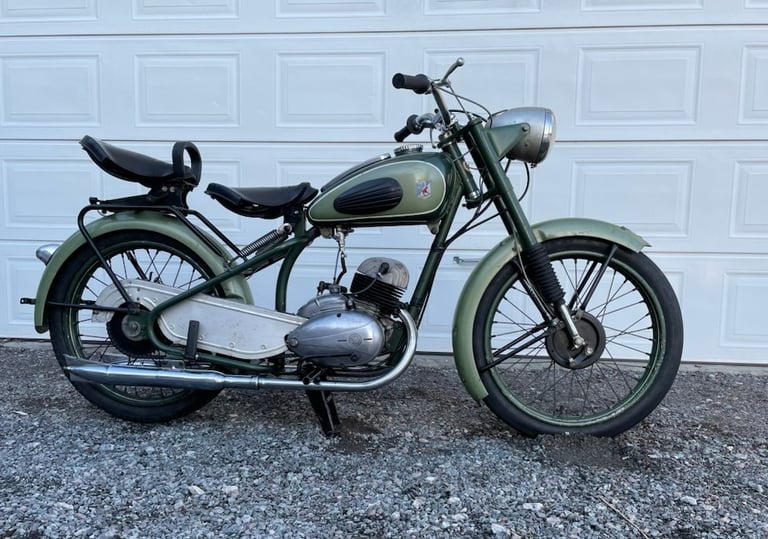
Tempo CZ
The Tempo CZ 150 was designed based on the experience that Øglænd had gathered since they started producing motorcycles in 1931, and the motorcycle was a good quality product throughout.
The engine with the CZ name came from a Czech factory and was a two-stroke engine of 148 cc with an output of 6.2 hp, which was plenty even for long trips with a passenger and luggage. In the design, special attention was paid to a favorable center of gravity location and sufficient ground clearance. The telescopic fork came from Øglænd itself and had long progressive suspension, which made the ride comfortable. At the same time, the controls of the bike were placed in such a way that one did not have to take one's hands off the handlebars while riding. The motorcycle was tastefully painted with polychromatic paints in two harmonious green colors. The speedometer was built into the headlight and connected to the engine's main shaft.
February 2025